Yo, check it. (HT: Frank Beckwith)
|
|
|
|
|
Tuesday
Friday
Twilight of the Mad Men
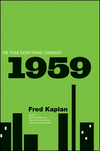 In his recent book 1959: The Year Everything Changed, Fred Kaplan provides a useful and entertaining account of the political, cultural, moral, and technological transformations that paved the way for the revolutions of the Sixties. Here is my review of the book, for the online edition of City Journal.
Thursday
Tuesday
Plotinus on divine simplicity, Part II
 We’ve seen how Plotinus argues for the existence of God (or “the One”), and how his conception of God includes something like the doctrine of divine simplicity. But we also noted that for Plotinus, the One is but one of three divine “hypostases,” the other two – Intellect and Soul – being derivative from the One. Let’s look now at how he derives these two further hypostases (once again following Lloyd Gerson’s helpful lead).
First, as a Platonist, Plotinus is committed to the existence of the Forms, for the usual sorts of reasons. (See chapter 2 of The Last Superstition for a refresher course on Platonism. Though the book ultimately opts for Scholastic realism rather than Platonic realism, I try to make it clear why Platonism is intellectually attractive.) Given the Forms’ existence, Plotinus appears to take the following line of reasoning to demonstrate the existence of his second divine hypostasis:
1. The Forms constitute a complex system of eternal necessary truths.
2. This system can exist only virtually in the One, not actually, since the One is not complex but absolutely simple.
3. So there must be a separate, derivative hypostasis to ground the actuality of these truths.
4. But eternal truths cannot exist except as contemplated by an eternal knower.
5. So this derivative hypostasis must be an Intellect.
Once again, let’s comment on the argument step by step (and once again, not everything I have to say by way of commentary should be attributed either to Plotinus or Gerson). Things are what they are because they instantiate certain Forms or universals. This individual triangle and that one are what they are because they instantiate triangularity, this individual cat and that one are what they are because they instantiate catness, and so forth. The Forms are, accordingly, essential to any complete explanation of the world. They are eternal and necessary – this or that triangle comes and goes, but triangularity does not and cannot. They are also logically interrelated in a way that entails various eternal and necessary truths – anything instantiating triangularity necessarily also instantiates trilaterality, anything instantiating threeness necessarily also instantiates oddness, and so forth.
That gives us step (1) of the argument. And the eternity and necessity of the Forms, together with their status as (part of) the ultimate explanation of things, would seem to entail their divinity. Since the One is the divine source of all, the Forms must exist in the One. And yet, as step (2) tells us, since the system of Forms exhibits a kind of complexity, it cannot exist “actually” in the One, which is absolutely simple, but only “virtually.” (Think of the way fire exists “virtually” in a match in a way it does not exist even virtually in a toothpick, since the former has an inherent power to generate fire that the latter does not. The fire exists “actually” only when the match is struck.)
At the same time, the Forms must exist “actually” if they are to explain anything. Hence, step (3) concludes, there must be a second-most fundamental explanatory principle of all reality after the One, in which the Forms are actualized – divine (since it is eternal, necessary, and part of the ultimate explanation of the world) but derived from the One. What is the nature of this “hypostasis” (to use the traditional Neo-Platonic language)? Anticipating a line of thought that would later become associated with St. Augustine, Plotinus argues that though eternal truths exist independent of the material world and independent of any finite mind (this much being familiar from Plato), they must nevertheless exist only as contemplated by some mind, namely an infinite mind (step (4), a move that arguably goes beyond Plato and makes Plotinus’ position a “Neo-” Platonism, though Plotinus himself didn’t see it that way). And thus we reach the conclusion that the second hypostasis must be thought of as a kind of divine Intellect.
But we are, in Plotinus’ view, still short of a complete account of the ultimate causes of the world. This brings us to his argument for Soul, the third of the three hypostases, which can be summarized as follows:
1. Intellect, since it contains the Forms, explains why things have the natures they have.
2. But the objects of the Intellect are not distinct from the Intellect itself.
3. And some things desire objects outside themselves (e.g. a plant “desires” to grow and flourish).
4. So Intellect cannot explain these desires.
5. So a third hypostasis is needed to explain them, namely Soul.
This argument might seem even more difficult to understand than the other two we’ve considered, but I think if we unpack it carefully we can see that it is not all that mysterious, at least given certain key metaphysical assumptions held in common by many ancient philosophers. Keep in mind that the point of Plotinus’ theory of the three hypostases is to show what must be the case if the world we know is to exist at all. It is to provide an ultimate explanation. The One is the ultimate explanation of the being or existence of things. Intellect is the explanation of their natures. But the world of our experience has, we might say, both its static and its dynamic aspects. The nature of a cat is what it is, unchangingly. As step (1) reminds us, Intellect is the explanation of why it has that nature. But as a living thing, a cat also goes through stages of development. It doesn’t exhibit every aspect of its “catness” all at once. In general, living things exist in a way that involves the gradual realization of various ends. Plants “desire” or “seek” to grow and flourish, acorns “aim” to become oaks, and so forth. Most living things do not consciously seek to realize such ends, of course. What we have here is best understood along the lines of Aristotle’s conception of final causality, “goal-directedness” in nature that is for the most part entirely unconscious and unthinking.
This “dynamic” side of the natural order is something Intellect does not explain. The reason is that goal-directedness or final causality involves one thing being “directed toward” something outside itself, and there is nothing like that in Intellect. As I have noted in several earlier posts (e.g. here and here), for ancient and medieval philosophers, thought does not involve the intellect’s “representing” the world outside it, but rather a kind of identity of the intellect with the nature of the thing it knows. This is why step (2) tells us that (the divine) Intellect is not distinct from the Forms it knows; in knowing a Form it does not “point to” something beyond itself, but is rather, in a sense, identical with the Form. (Again, see the earlier posts just linked to for more on this conception of thought.) Since there is no “pointing beyond itself” in Intellect, step (4) concludes that Intellect cannot account for those aspects of the natural world (noted in step (3)) that do involve a thing’s “pointing beyond itself” – that involve “desire,” goal-directedness, final causality. (Plotinus focuses on living things, but to the extent that final causality, properly understood, pervades the natural order in the ways discussed in many previous posts, all of material reality would seem to require such explanation for the same reason living things do.) There must, then, be a third-most fundamental explanatory principle of all reality after the One and Intellect, one which accounts for this “directedness” of things towards certain ends outside them, and this is what Plotinus means by Soul.
At the same time, the Forms must exist “actually” if they are to explain anything. Hence, step (3) concludes, there must be a second-most fundamental explanatory principle of all reality after the One, in which the Forms are actualized – divine (since it is eternal, necessary, and part of the ultimate explanation of the world) but derived from the One. What is the nature of this “hypostasis” (to use the traditional Neo-Platonic language)? Anticipating a line of thought that would later become associated with St. Augustine, Plotinus argues that though eternal truths exist independent of the material world and independent of any finite mind (this much being familiar from Plato), they must nevertheless exist only as contemplated by some mind, namely an infinite mind (step (4), a move that arguably goes beyond Plato and makes Plotinus’ position a “Neo-” Platonism, though Plotinus himself didn’t see it that way). And thus we reach the conclusion that the second hypostasis must be thought of as a kind of divine Intellect.
But we are, in Plotinus’ view, still short of a complete account of the ultimate causes of the world. This brings us to his argument for Soul, the third of the three hypostases, which can be summarized as follows:
1. Intellect, since it contains the Forms, explains why things have the natures they have.
2. But the objects of the Intellect are not distinct from the Intellect itself.
3. And some things desire objects outside themselves (e.g. a plant “desires” to grow and flourish).
4. So Intellect cannot explain these desires.
5. So a third hypostasis is needed to explain them, namely Soul.
This argument might seem even more difficult to understand than the other two we’ve considered, but I think if we unpack it carefully we can see that it is not all that mysterious, at least given certain key metaphysical assumptions held in common by many ancient philosophers. Keep in mind that the point of Plotinus’ theory of the three hypostases is to show what must be the case if the world we know is to exist at all. It is to provide an ultimate explanation. The One is the ultimate explanation of the being or existence of things. Intellect is the explanation of their natures. But the world of our experience has, we might say, both its static and its dynamic aspects. The nature of a cat is what it is, unchangingly. As step (1) reminds us, Intellect is the explanation of why it has that nature. But as a living thing, a cat also goes through stages of development. It doesn’t exhibit every aspect of its “catness” all at once. In general, living things exist in a way that involves the gradual realization of various ends. Plants “desire” or “seek” to grow and flourish, acorns “aim” to become oaks, and so forth. Most living things do not consciously seek to realize such ends, of course. What we have here is best understood along the lines of Aristotle’s conception of final causality, “goal-directedness” in nature that is for the most part entirely unconscious and unthinking.
This “dynamic” side of the natural order is something Intellect does not explain. The reason is that goal-directedness or final causality involves one thing being “directed toward” something outside itself, and there is nothing like that in Intellect. As I have noted in several earlier posts (e.g. here and here), for ancient and medieval philosophers, thought does not involve the intellect’s “representing” the world outside it, but rather a kind of identity of the intellect with the nature of the thing it knows. This is why step (2) tells us that (the divine) Intellect is not distinct from the Forms it knows; in knowing a Form it does not “point to” something beyond itself, but is rather, in a sense, identical with the Form. (Again, see the earlier posts just linked to for more on this conception of thought.) Since there is no “pointing beyond itself” in Intellect, step (4) concludes that Intellect cannot account for those aspects of the natural world (noted in step (3)) that do involve a thing’s “pointing beyond itself” – that involve “desire,” goal-directedness, final causality. (Plotinus focuses on living things, but to the extent that final causality, properly understood, pervades the natural order in the ways discussed in many previous posts, all of material reality would seem to require such explanation for the same reason living things do.) There must, then, be a third-most fundamental explanatory principle of all reality after the One and Intellect, one which accounts for this “directedness” of things towards certain ends outside them, and this is what Plotinus means by Soul.
It will not have escaped the reader’s notice that Plotinus’ three divine hypostases – the One, Intellect, and Soul – are at least vaguely reminiscent of the three divine Persons of the Christian doctrine of the Trinity. Is the parallel more than superficial? I’ll address this question in a third and final post on Plotinus and divine simplicity.
Friday
Plotinus on divine simplicity, Part I
1. There must be a first principle of all if there is to be an explanation of why the world exists.
2. If the first principle of all were composed of parts, then those parts would be ontologically prior to it.
3. But in that case it would not be the first principle of all.
4. So the first principle is not composed of parts, but is absolutely simple.
5. If there were a distinction between what the first principle is and the fact that it is, then there could be more than one first principle.
6. But in order for there to be more than one, there would have to be some attribute that distinguished them.
7. But since a first principle is absolutely simple, there can be no such attribute.
8. So there cannot be more than one first principle.
9. So there is no distinction in the first principle between what it is and the fact that it is.
10. So the first principle is not only absolutely simple but utterly unique: the One
Let’s walk through the argument step by step. (The comments that follow in some cases go beyond what Gerson himself says.) What is meant by a “first principle” in step (1) is, essentially, a bottom level explanation of the world, something that explains everything else without needing an explanation itself. Accordingly, this premise is at least implicitly accepted by the atheist no less than by the theist, at least insofar as the atheist regards scientific explanations as terminating in a most fundamental level of physical laws that determine all the rest – whether this takes the form of a “Theory of everything” or instead a conjunction of several physical theories left unreduced to some such single theory. The dispute between Plotinus and the atheist, then, would not be over the existence of a “first principle,” but rather over its character. And Plotinus wants to show in the rest of the argument that the first principle of all would have to be simple in (something like) the sense of “simplicity” enshrined in the doctrine of divine simplicity.
The “parts” referred to in step (2), accordingly, are parts of any sort, whether material or metaphysical. The idea here is that if a thing is composed of parts, then the parts are more fundamental than it is. Moreover, those parts would need to be combined in order for the thing to exist. (This is true even if the thing has always existed – for there would in that case still have to be something that accounts for why the parts have always been conjoined.) A purported “first principle” with parts just wouldn’t be a bottom level explanation or first principle at all, then – it would in that case need explanation itself.
With step (4), then, we arrive already at the simplicity of the first principle of all. But when Plotinus refers to this principle as “the One,” he does not mean merely that it has no parts but also that it is utterly unique – that the sort of theism his argument leads us to is necessarily a monotheism. That is part of what the next stage of the argument seeks to establish.
It also seeks to establish an aspect of the doctrine of divine simplicity that is usually thought to be more distinctive of later, Scholastic philosophy. The distinction in step (5) between what a thing is and that it is is, as Gerson says, an anticipation of the famous medieval distinction between essence and existence. In things whose essence and existence are distinct – which, for Aquinas, is everything other than God – the essence entails a general category under which distinct instances might fall. There is, for example, the essence human being, under which Socrates and Obama both fall as particular instances, each with its own “act of existing.” (See chapter 2 of Aquinas for the rundown.) Similarly, if the essence of the first principle of all were distinct from its existence, there might be this “first principle of all” with its act of existing, that “first principle of all” with its own act of existing, and so forth.
But for that to be possible, there would, step (6) tells us, have to be some attribute that one “first principle of all” had that the other lacked. And that, Plotinus holds, makes no sense. For then it would be what they did not differ with respect to – what they had in common – that would be the true first principle of all, since it would be that which ultimately makes each of them the kind of thing it is. That is to say, one “first principle of all” and a second “first principle of all” would each be what it is only because each instantiates the same essence; and in that case it would be the common essence itself, and neither of the individual instances, which (as the explanation of these instances) would be the true first principle. Moreover, we would have in this case a distinction between a first principle itself and its attributes, which conflicts with the simplicity arrived at in (4). Hence there can be no such attribute (step (7)), and thus no way in principle to distinguish one first principle of all from another (step (8)), and thus no difference between the essence of a first principle and its existence (step (9)). The first principle of all is thus “simple” or without any parts in the strongest possible sense.
Actually, an essence/existence distinction would seem directly to violate (4), making the reasoning from (6)-(9) redundant; but as Gerson interprets him, Plotinus seems to argue in this manner anyway. In any event, if essence and existence are identical in the first principle of all – if the first principle isn’t a being among others in a general category but rather just is subsistent being or existence itself (ipsum esse subsistens, as Aquinas would later put it) – then we have something approaching the doctrine of divine simplicity as it would come to be understood in the classical theistic tradition.
We don’t yet quite have classical theism per se, however; for the One is, of course, but one of three divine “hypostases” in Plotinus’ view, even if the most fundamental. The remaining two are Intellect and Soul, and we will examine what Plotinus has to say about them in part II.
2. If the first principle of all were composed of parts, then those parts would be ontologically prior to it.
3. But in that case it would not be the first principle of all.
4. So the first principle is not composed of parts, but is absolutely simple.
5. If there were a distinction between what the first principle is and the fact that it is, then there could be more than one first principle.
6. But in order for there to be more than one, there would have to be some attribute that distinguished them.
7. But since a first principle is absolutely simple, there can be no such attribute.
8. So there cannot be more than one first principle.
9. So there is no distinction in the first principle between what it is and the fact that it is.
10. So the first principle is not only absolutely simple but utterly unique: the One
Let’s walk through the argument step by step. (The comments that follow in some cases go beyond what Gerson himself says.) What is meant by a “first principle” in step (1) is, essentially, a bottom level explanation of the world, something that explains everything else without needing an explanation itself. Accordingly, this premise is at least implicitly accepted by the atheist no less than by the theist, at least insofar as the atheist regards scientific explanations as terminating in a most fundamental level of physical laws that determine all the rest – whether this takes the form of a “Theory of everything” or instead a conjunction of several physical theories left unreduced to some such single theory. The dispute between Plotinus and the atheist, then, would not be over the existence of a “first principle,” but rather over its character. And Plotinus wants to show in the rest of the argument that the first principle of all would have to be simple in (something like) the sense of “simplicity” enshrined in the doctrine of divine simplicity.
The “parts” referred to in step (2), accordingly, are parts of any sort, whether material or metaphysical. The idea here is that if a thing is composed of parts, then the parts are more fundamental than it is. Moreover, those parts would need to be combined in order for the thing to exist. (This is true even if the thing has always existed – for there would in that case still have to be something that accounts for why the parts have always been conjoined.) A purported “first principle” with parts just wouldn’t be a bottom level explanation or first principle at all, then – it would in that case need explanation itself.
With step (4), then, we arrive already at the simplicity of the first principle of all. But when Plotinus refers to this principle as “the One,” he does not mean merely that it has no parts but also that it is utterly unique – that the sort of theism his argument leads us to is necessarily a monotheism. That is part of what the next stage of the argument seeks to establish.
It also seeks to establish an aspect of the doctrine of divine simplicity that is usually thought to be more distinctive of later, Scholastic philosophy. The distinction in step (5) between what a thing is and that it is is, as Gerson says, an anticipation of the famous medieval distinction between essence and existence. In things whose essence and existence are distinct – which, for Aquinas, is everything other than God – the essence entails a general category under which distinct instances might fall. There is, for example, the essence human being, under which Socrates and Obama both fall as particular instances, each with its own “act of existing.” (See chapter 2 of Aquinas for the rundown.) Similarly, if the essence of the first principle of all were distinct from its existence, there might be this “first principle of all” with its act of existing, that “first principle of all” with its own act of existing, and so forth.
But for that to be possible, there would, step (6) tells us, have to be some attribute that one “first principle of all” had that the other lacked. And that, Plotinus holds, makes no sense. For then it would be what they did not differ with respect to – what they had in common – that would be the true first principle of all, since it would be that which ultimately makes each of them the kind of thing it is. That is to say, one “first principle of all” and a second “first principle of all” would each be what it is only because each instantiates the same essence; and in that case it would be the common essence itself, and neither of the individual instances, which (as the explanation of these instances) would be the true first principle. Moreover, we would have in this case a distinction between a first principle itself and its attributes, which conflicts with the simplicity arrived at in (4). Hence there can be no such attribute (step (7)), and thus no way in principle to distinguish one first principle of all from another (step (8)), and thus no difference between the essence of a first principle and its existence (step (9)). The first principle of all is thus “simple” or without any parts in the strongest possible sense.
Actually, an essence/existence distinction would seem directly to violate (4), making the reasoning from (6)-(9) redundant; but as Gerson interprets him, Plotinus seems to argue in this manner anyway. In any event, if essence and existence are identical in the first principle of all – if the first principle isn’t a being among others in a general category but rather just is subsistent being or existence itself (ipsum esse subsistens, as Aquinas would later put it) – then we have something approaching the doctrine of divine simplicity as it would come to be understood in the classical theistic tradition.
We don’t yet quite have classical theism per se, however; for the One is, of course, but one of three divine “hypostases” in Plotinus’ view, even if the most fundamental. The remaining two are Intellect and Soul, and we will examine what Plotinus has to say about them in part II.


